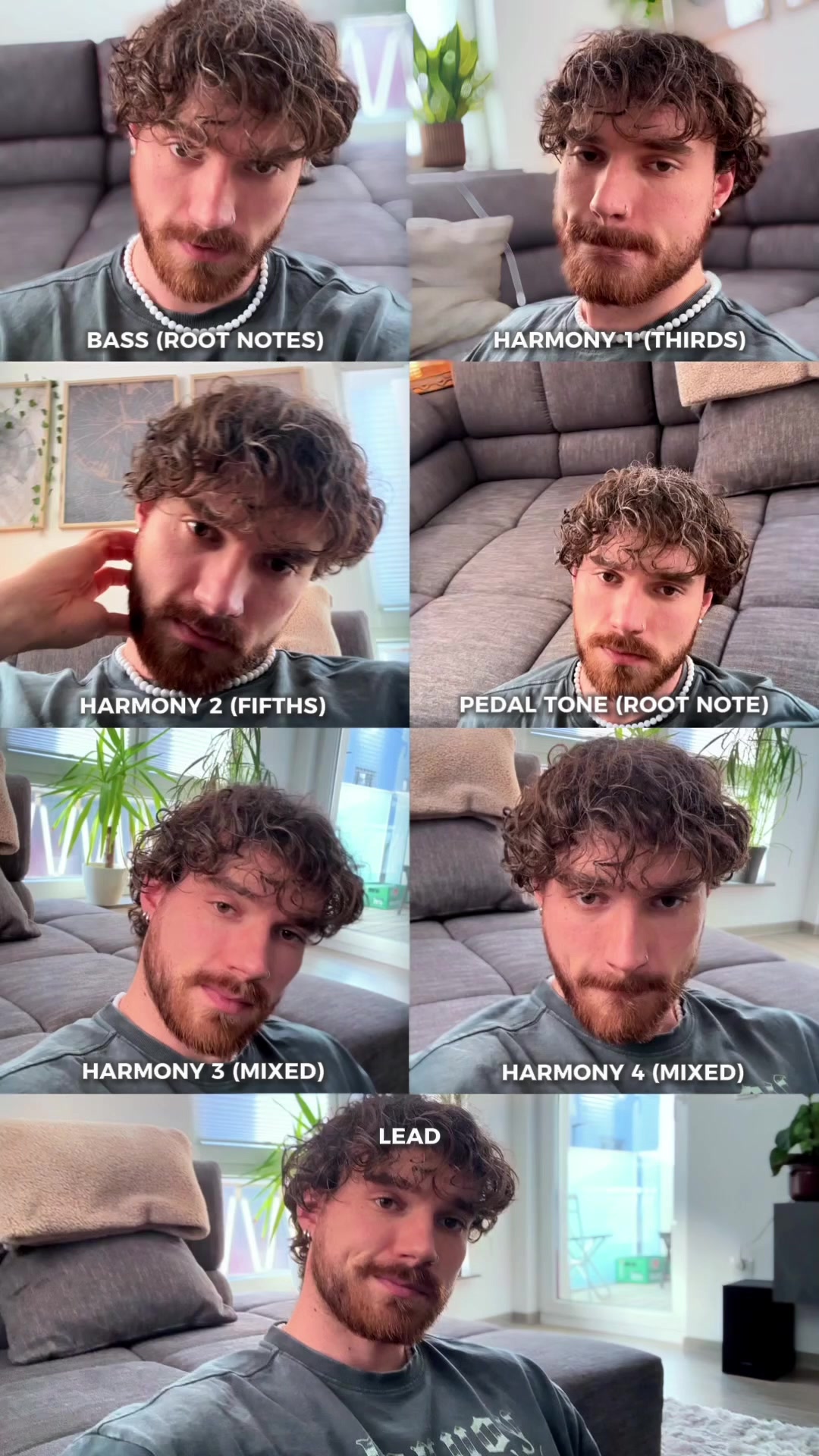
Lead
The center of the meaning. Everything else exists to support it, not replace it.
Vocal Layering
Vocal layering works best when every lane has a job. Harmonade helps you plan the lead, doubles, harmonies, octaves, and background bed as one visual system instead of piling on tracks until the hook blurs.
Planning first
A lot of vocal layering problems come from stacking first and deciding later. If the chorus only needed a double, the extra harmony lanes just make it harder to mix. If the song truly wants a wider emotional lift, then the layers need to be spaced on purpose.
Stack map
The center of the meaning. Everything else exists to support it, not replace it.
Useful for weight, confidence, and a stronger chorus outline without changing the note choices.
Use these when the section wants a new emotional lift, not simply because there is room for more sound.
Longer support layers can widen the record, but they should stay behind the lyric rhythm and not flatten the front vocal.
Creator outcome
When the hook has only a few seconds to land, the stack has to feel rich without slowing comprehension. That means the lead still needs a clean path through the arrangement. Harmonade is useful here because the same stack decisions that help the mix also affect whether the clip feels immediate or muddy.
Related pages
Ready